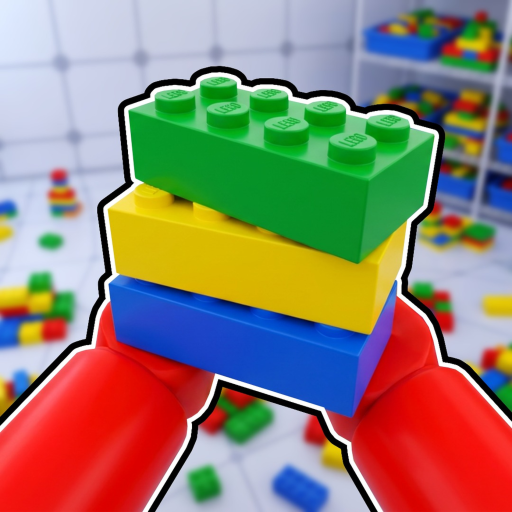
1 · Sort a full run
Play one complete run at a tempo you can repeat. Note bricks sorted and elapsed time — those are the only two inputs a pace needs.
Everything this game documents is a sorting loop, a fastest-time goal, and a Store — these guides turn that into a method: learn the loop, measure your pace, and evaluate the catalog.
Sort the Bricks! is a Roblox sorting game by The Brick Turns, created July 19, 2026, that has since passed 10,701,001 visits and sits at 83% positive votes (4,694 up / 991 down, checked 2026-10-09). The official description is the whole design document: sort thousands of colorful bricks, place every piece in the correct drawer, organize alone or with friends in 16-player servers, unlock upgrades and abilities, and climb leaderboards scored on fastest sorting times. Community trackers measured the typical visit at about 8 minutes — so every guide question that matters is a pace question: how fast you sort, and what makes the next run faster.
Three routes, one per decision: learn the loop, measure a run, or judge the Store before spending.
The same four steps work on day one and after every update.
Play one complete run at a tempo you can repeat. Note bricks sorted and elapsed time — those are the only two inputs a pace needs.
Enter both numbers in the calculator. You get bricks per minute and seconds per brick, the two rates every comparison here uses.
Take one variable at a time: an upgrade, an ability, a play window with fewer distractions. Changing two hides which one moved the number.
Re-run and compare. An 80 → 88 bricks/min jump is a real improvement you can see; no-feeling differences wash out of dated numbers.
Sourced context so your expectations match the game's scale — each figure carries its source and check date.
Concurrent players: 257 at the 2026-10-09 sample; 110 average over a prior tracked week (BloxBunny samples, checked 2026-10-09). The game's fastest-time boards are climbed by exactly the loop above; creator coverage like OTTER EXTENDED's 72-minute #1-leaderboard run shows no hidden route, just sustained pace.
TikTok's daily sorting challenges (running since August 2026) and self-imposed formats — like finding the last grey brick with your eyes closed — are how the community manufactures difficulty. Any of them converts into a pace game you can measure with the same two numbers.
Five runs, one evening — the concrete version of the pace loop, sized to the ~8-minute visit trackers measured.
Sort two full runs at a comfortable tempo and record both. Calculate each separately: if the two rates differ by more than about 10%, your first run was warm-up — use the second as the honest baseline.
Take the upgrade or ability the game dangles first — the description promises both — and nothing else. Re-run, re-calculate, and compare against the baseline rate, not your best moment.
Most pace in a drawer-sorting game dies between bricks: hesitation at the drawer, backtracking to a color you misread. Run once deliberately watching for the stall pattern, not the clock.
Full effort, same conditions. If bricks-per-minute moved, the change was worth keeping; if not, you saved your currency for something that will. Log it and the plan restarts from a new baseline.
The only loop the game documents is sorting: read the brick, place it in the correct drawer, repeat, and let upgrades and abilities compound. The measurable skill is pace — sort one full run, enter bricks and time in the calculator, then beat that rate on your next run. Community leaderboard videos show the same grind; there is no documented shortcut.
Not as recommendations, because no checked source explains what the sixteen Store passes do. The catalog page lists every name and observed price with its checked date, and the tier-list page gives you a five-question test to measure any pass's value in your own runs.
No. This is an unofficial fan resource. Gameplay facts come from the official Roblox description and dated community sources; every page names them, and the sources register lists them all with check dates.
No. The official description says you can organize alone or with friends — solo sorting is the standard way the community plays it, and server sizes cap at 16 players.
Codes status · Pass framework · Update watch · Official game